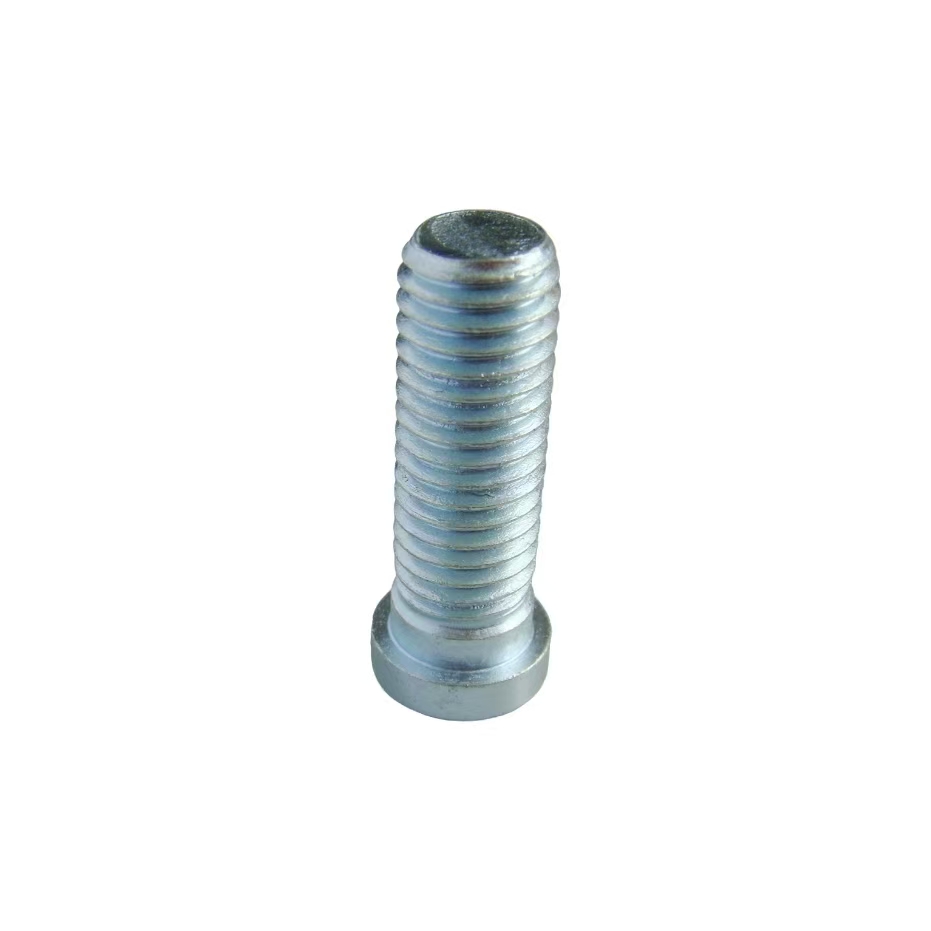
For high-load, high-fatigue applications, structural integrity is not negotiable. While alternative methods like casting, machining, or 3D printing claim "near-wrought" properties, Steel Forging remains the industry benchmark for heavy-duty performance. Transitioning a component to a forged design requires upfront capital for tooling. It also demands specific metallurgical alignment. You must justify this investment against cheaper alternatives.
This guide breaks down the core Steel Forging processes, equipment categories, and material selection criteria. It will help your engineering and procurement teams validate process fit. You will learn how to mitigate production risks effectively. We will also show you how to shortlist qualified suppliers to ensure long-term manufacturing success.
Key Takeaways
The Forging Advantage: Forging uniquely aligns internal grain flow to the geometry of the part, eliminating porosity and maximizing fatigue resistance.
Process by Geometry: Open-die forging is optimal for massive, low-volume components, while closed-die (impression) forging amortizes tooling costs across high-volume, near-net-shape runs.
Temperature Trade-offs: Hot forging maximizes ductility and structural density; cold forging delivers superior surface finish and tight tolerances but requires specialized lubrication and softer initial alloys.
Supplier Due Diligence: The most cost-effective forging partners integrate in-house die creation, CAD/simulation, heat treating, and CNC finishing to reduce supply chain bottlenecks.
The Business Case for Steel Forging: Overcoming Machining and Casting Limitations
Evaluating manufacturing processes often comes down to upfront costs versus long-term performance. You might wonder when the tooling investment of forging outweighs the low-barrier entry of casting. Subtractive machining offers a quick start. Casting allows for complex internal geometries cheaply. However, they fall short in extreme environments. You must evaluate the operational demands of your final component.
Structural density is a major deciding factor. Casting pours molten metal into a mold. As it cools, it often traps gases. This creates internal micro-voids or porosity. These voids act as critical failure points under heavy stress. Forging crushes these voids completely. The extreme compressive forces consolidate the metal. You achieve near 100% density. This solid structure prevents sudden catastrophic failures in heavy machinery.
Directional grain flow offers another massive advantage. When you machine a part from a solid block, you cut through the natural grain of the metal. This severs its internal structural pathways. Plastic deformation in forging works differently. It physically reorients the metal's grain structure. The grain lines bend to match the contours of your part. This yields unmatched impact toughness. The component resists fatigue far better than any machined equivalent.
You must also consider the cost-to-volume ratio. Tooling and die creation require significant initial capital. Where is the break-even point? You justify this cost through material savings and reduced testing. Subtractive machining wastes a massive percentage of raw material. Forging operates closer to the net shape. It minimizes scrap. Furthermore, forged parts rarely fail internal flaw tests. Eliminating secondary flaw-testing speeds up production. For high-volume runs, the initial die creation costs amortize quickly.
Common Mistakes in Process Selection
Ignoring Draft Angles: Designing a part for subtractive machining and sending it directly to a forging supplier. You must include draft angles to allow the part to eject from the die.
Chasing Low Upfront Costs: Choosing casting for a high-impact load-bearing joint. The warranty claims will quickly erase your initial manufacturing savings.
Specifying the Right Steel Forging Process: Tooling and Temperature
You cannot treat forging as a single, uniform process. It divides into distinct categories based on the tooling setup and the operating temperature. You need to align your geometry and material with the correct method.
Solution Categories (By Tooling)
Closed-Die (Impression) Forging: This process uses custom-machined dies that fully enclose the workpiece. The hammers force the metal to fill the cavity. It is the best method for high-strength-to-weight ratios. It provides excellent high-volume consistency. You will notice excess metal squeezing out between the dies. We call this "flash." Flash cools rapidly and acts as a barrier. It creates immense internal pressure. This pressure ensures uniform cavity filling across complex geometries.
Open-Die Forging: We consider this the standard for oversized components. It can handle blocks or shafts up to 200,000+ lbs. The dies do not fully enclose the metal. They act as tools, striking the workpiece as an operator rotates it. It is ideal for continuous grain flow in massive blocks. You avoid the restrictive size limits of impression molds.
Seamless Rolled Ring Forging: This process is essential for high-stress radial components. You use it to manufacture massive gears, flanges, and aerospace rings. A machine punches a hole in a thick metal billet. Rollers then squeeze and expand the ring. It achieves perfect directional flow. You gain exceptional radial strength without the structural weakness of welded joints.
Evaluation Dimensions (By Temperature)
Temperature dictates material malleability and the required mechanical force. You must balance surface finish requirements against internal structural needs.
Forging Temperature
Range
Core Advantages
Key Drawbacks & Considerations
Hot Forging
900°C – 1250°C
Maximizes ductility. Limits strain hardening. Requires less mechanical force to shape complex parts.
Forms surface oxidation (scale). Requires secondary surface finishing like shot blasting to remove scale.
Warm Forging
750°C – 950°C
Balances manageable deformation forces with significantly reduced scale formation.
Requires strict thermal control. Often needs localized induction heating to maintain the exact temperature window.
Cold Forging
Room Temperature
Delivers exceptional dimensional tolerances. Yields superior surface finish straight from the die.
Requires immense compressive forces. Demands specialized lubrication. Risks residual internal stress if not annealed.
Material Selection: Evaluating Steel Alloys for Forged Components
You cannot forge every metal effectively. Your alloy selection determines the final mechanical properties and the complexity of the forging process itself. Careful feature-to-outcome mapping is essential.
Feature-to-Outcome Mapping
Carbon Steels (e.g., SAE 1018, 1045): These offer predictable machinability and excellent cost-efficiency. Low carbon steels like 1018 provide outstanding forgeability. They flow easily into complex dies. Medium carbon steels like 1045 balance forgeability with higher strength. You will commonly see them used for automotive axles, brackets, and heavy-duty gears.
Alloy Steels (e.g., SAE 4140, 4340): These incorporate elements like chromium and molybdenum. They offer very high tensile strength and incredible impact resistance. You gain deep hardenability during post-forging heat treatments. Aerospace, defense, and heavy machinery sectors rely heavily on these blends. They respond predictably to quenching and tempering.
Stainless Steels (e.g., 316, 304): You must specify these for corrosive, marine, or medical environments. However, they carry significant implementation risks. Stainless steel possesses severe work-hardening tendencies. As you deform it, it becomes incredibly hard. This requires hyper-precise temperature control during forging. If the temperature drops slightly, the material can crack under pressure.
Tool Steels (e.g., H13): Metallurgists design these specifically to resist high-temperature deformation. Ironically, they are frequently used to manufacture the forging dies themselves. They maintain their hardness even when repeatedly exposed to glowing-hot billets.
Exclusion Criteria
You must know what to avoid. Some metals are entirely unsuitable for forging. Brittle cast irons cannot undergo plastic deformation. They shatter under compressive impact. You must also avoid high-sulfur or high-phosphorus steel blends. These impurities cause "hot shortness." The metal will tear and crack severely when compressed at high temperatures.
Heavy Forging Equipment: Assessing Supplier Capabilities
A supplier’s physical machinery dictates their geometric limits. It controls their precision. It determines their production speed. You must understand their equipment to assess their true capabilities. Do not assume all Steel Forging facilities are equal.
Hammers (Drop & Counterblow): Hammers utilize repeated, high-impact kinetic energy. A heavy ram drops onto the stationary anvil. This is ideal for driving molten metal rapidly into complex closed-die cavities. However, standard drop hammers have limits. For extreme-tonnage, massive components, suppliers use counterblow hammers. These drive two massive rams toward each other. They execute dual-sided deformation. This absorbs the immense shockwaves that would otherwise destroy a traditional anvil.
Forging Presses (Hydraulic & Mechanical): Presses operate entirely differently. They apply continuous, controlled squeezing pressure. They do not strike the metal. Instead, they push it. This continuous pressure penetrates much deeper into the workpiece than rapid hammer impacts. It ensures uniform internal density. If you are manufacturing critical structural components, you generally prefer hydraulic press forging for its deep internal consolidation.
Heating Infrastructure: You must also audit a supplier's furnace capabilities. High-volume gas furnaces heat large batches of billets simultaneously. They are traditional and effective. However, induction furnaces offer superior precision. They use electromagnetic fields to heat the billet rapidly from within. They are fast, localized, and highly uniform. Reliable thermal control dictates the metallurgical consistency of your final batch. Inconsistent heating leads to irregular grain structures.
Supplier Shortlisting Logic: Risk Mitigation and Compliance
Procurement teams face immense risks if they choose the wrong forging partner. Fragmented supply chains lead to delays. They cause accountability issues when defects arise. You need a systematic approach to vendor evaluation.
End-to-End Capabilities
Evaluate whether a supplier handles the entire workflow under one roof. Do they offer CAD simulation? Advanced software predicts deformation and optimizes die flow before cutting metal. This reduces material waste. Do they manage their own billet cutting? Can they handle post-forging heat treatments? You want a partner that controls normalizing, quenching, and tempering internally. Outsourcing these steps introduces major quality control risks.
Secondary Operations
Assess their in-house finishing capacities. Raw forgings require secondary work. Look for automated shot blasting equipment. This removes the heavy scale generated during hot forging. Do they have extensive CNC machining capabilities? You want them to mill the rough forging down to your final geometric tolerances. Fragmented vendor risks vanish when one facility delivers the finished, ready-to-assemble part.
Quality Assurance & Traceability
Demand proof of compliance. Look for current ISO certifications. Ask for mill certifications for all raw materials. If you operate in the aerospace, defense, or energy sectors, verifiable material traceability is a non-negotiable compliance requirement. A qualified supplier tracks the exact chemical composition of every batch back to the original steel mill.
Next-Step Actions for RFQs
Establish a strict framework when submitting a Request for Quote (RFQ). This ensures apples-to-apples comparisons.
Provide comprehensive 3D CAD models. Include requested draft angles and machining allowances.
Specify your expected annual volumes clearly. This dictates whether they quote a hammer or a press process.
State the exact alloy grade and required post-forging heat treatment.
Require a transparent tooling amortization schedule. Know exactly who owns the die after production begins.
Conclusion
Steel forging is an engineered solution designed for extreme-stress environments. It is never a basic commodity purchase. You are investing in structural density and directional grain flow that other manufacturing methods simply cannot replicate. The longevity of your heavy-duty components depends entirely on this process.
The correct alignment of your chosen steel grade, temperature window, and specific die process dictates success. It ensures mechanical integrity. It ultimately lowers the lifetime cost per part by eliminating premature failures in the field. When you understand the machinery and the metallurgy, you make vastly superior procurement decisions.
We encourage your engineering teams to engage early. Consult with forging specialists during the initial CAD phase. Do not wait until the design is locked. They can help you optimize part geometries for smooth die-flow. This collaborative approach minimizes long-term production costs and maximizes your component’s fatigue resistance.
FAQ
Q: What is the difference in tool life between hot and cold steel forging?
A: Hot forging dies degrade significantly faster. They suffer from continuous thermal cycling and abrasive scale friction. Cold forging dies last much longer because they operate at room temperature. However, they require a significantly higher initial investment. They must be engineered to withstand immense compressive forces without fracturing.
Q: Can you forge complex internal geometries?
A: Forging is generally limited to shaping external profiles. The metal must be able to flow out of the die cavity smoothly. Creating complex, under-cut internal cavities during the initial strike is nearly impossible. These internal features typically require post-forging subtractive CNC machining.
Q: Why is 4140 steel so common in industrial forging?
A: SAE 4140 is a highly versatile alloy. Its specific chromium and molybdenum content provides an ideal balance. It yields predictable high fatigue strength and excellent toughness. Furthermore, it responds exceptionally well to post-forging heat treatments, making it highly reliable for heavy-duty industrial components.
Q: Are there minimum order quantities (MOQs) for steel forging?
A: Yes, closed-die forging usually requires higher MOQs. You need large production runs to absorb the expensive custom die creation costs. Conversely, open-die forging does not require custom enclosed molds. It can economically produce single-unit prototypes or low-volume massive parts without prohibitive tooling fees.
Nanjing Best International Co., Ltd. is a reputable manufacturer and supplier of industrial components based in China. Our factory is situated in Changzhou City, which can be conveniently reached within 1.5 hours by car from Nanjing.