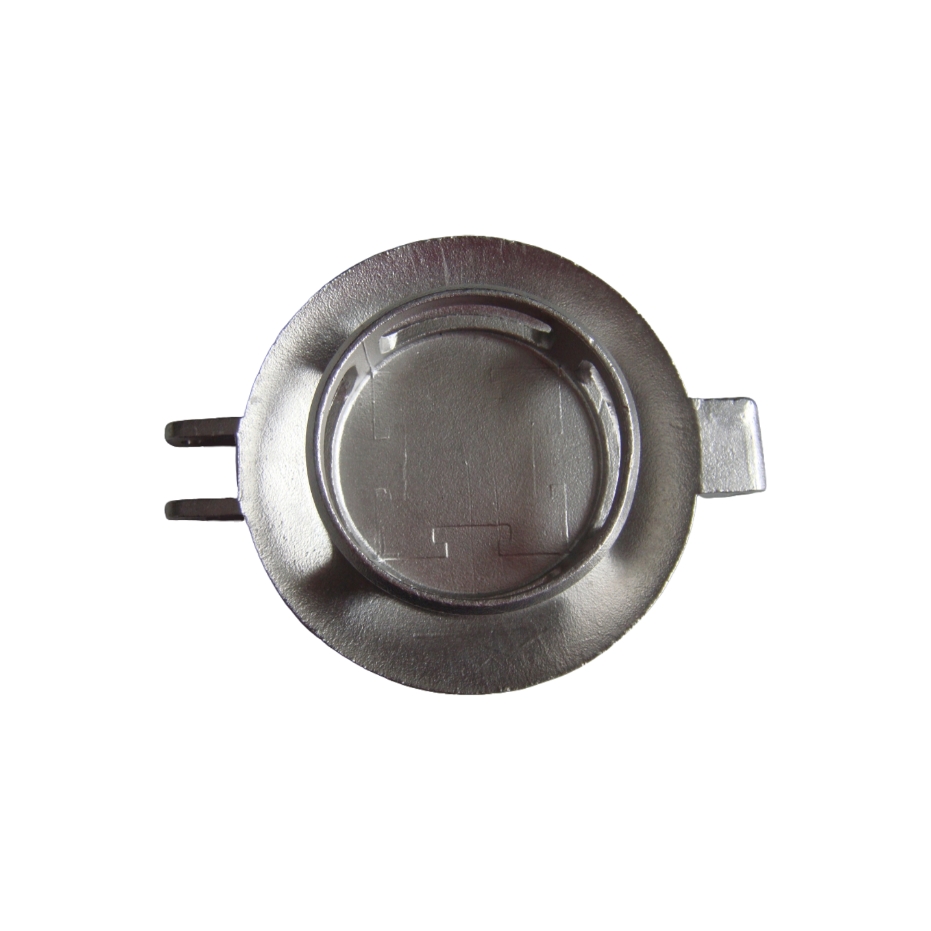
Specifying stainless steel parts carries incredibly high stakes for modern engineering teams. You must constantly balance extreme environmental demands, such as severe corrosion and intense heat, against strict project budgets and tight lead times. Stainless Steel Casting serves as a powerful near-net-shape manufacturing process to solve this dilemma. It routinely replaces complex welded fabrications and eliminates the massive material waste generated by machining parts from solid billets.
However, achieving success requires precise planning and execution on the foundry floor. This guide gives procurement teams and engineers a clear, evidence-based framework. You will learn how to accurately select casting methods, specify the appropriate alloys, and effectively vet potential foundry partners to ensure your next project succeeds from prototype to production.
Key Takeaways
Method alignment: Investment casting dominates for complex, high-tolerance parts, while sand casting remains viable for low-volume or oversized components.
Alloy trade-offs: Over-specifying alloys (e.g., defaulting to 316L when 304 suffices) is a primary driver of unnecessary project costs.
Quality assurance: True cost-per-part must factor in secondary machining, passivation, and Non-Destructive Testing (NDT) required for compliance.
Partner vetting: The most critical differentiator among foundries is their internal metallurgical control and defect-rate transparency.
Framing the Decision: When to Specify Stainless Steel Casting
Every engineering team faces a fundamental manufacturing choice during the design phase. Do you cast, forge, weld, or machine from a solid billet? Machining solid billets yields excellent structural properties but generates significant material waste. Forging works well for simple shapes but struggles to create intricate internal features. Welded fabrications often introduce weak points at the heat-affected zones. Casting provides a unique advantage by forming the molten metal incredibly close to its final shape.
You should evaluate three primary success criteria when making this decision. First, consider geometric complexity. Casting thrives on internal cavities and complex undercuts. Machining these exact features often proves impossible or prohibitively expensive. Second, analyze your material yield. High-value alloys demand minimal scrap. Near-net-shape processes keep expensive metals inside your final product rather than on the cutting room floor. Finally, calculate your volume threshold. Upfront tooling costs require careful amortization over the production run. If you only need a few simple geometries, direct machining usually wins. Yet, as part complexity and volume scale up, casting quickly becomes the clear economic choice.
Evaluating Stainless Steel Casting Methods
Once you choose to cast a component, you must select the appropriate method. Different techniques yield vastly different outcomes regarding finish, tolerance, and cost.
Investment Casting (Lost Wax)
Investment casting creates parts using a ceramic shell built around a consumable wax pattern. It delivers exceptional results for complex, precision components. You can expect a superior surface finish, typically landing around 125 RMS. It easily achieves tight tolerances of ±0.005 inches per inch. This drastically reduces the need for secondary machining. However, it carries distinct risks. You will face higher upfront tooling costs to create the aluminum wax-injection dies. Initial samples also require longer lead times compared to simpler methods.
Sand Casting
Sand casting pours molten metal directly into a disposable sand mold. This method excels when producing massive parts like industrial pumps, manifolds, and large valves. It remains highly cost-effective for low-volume runs. Tooling iteration happens much faster because you can easily modify the wooden or polyurethane patterns. Unfortunately, the trade-offs are significant. The surface finish is generally poor, which forces heavy secondary machining for mating surfaces. It also carries a naturally higher risk of internal inclusions and porosity.
Centrifugal Casting
Centrifugal casting spins a mold at high speeds while pouring the metal. The intense centrifugal force creates optimal density and superior structural integrity. This makes it perfect for symmetrical, tubular components like pipes or rings. Still, its applications remain strictly limited. You cannot use it for asymmetrical or complex geometries.
Casting Method
Best Application
Typical Surface Finish
Tooling Investment
Investment Casting
Complex geometry, tight tolerances
Excellent (125 RMS)
High
Sand Casting
Large components, low volume runs
Poor to Moderate
Low
Centrifugal Casting
Tubular, symmetrical parts
Good
Moderate
Material Selection: Navigating Common Stainless Steel Alloys
Selecting the perfect alloy dictates both component performance and project budget. Engineers frequently over-specify materials, which needlessly drives up procurement expenses.
Austenitic (304/304L, 316/316L)
These represent the most common alloys in the casting industry. They excel in food processing equipment, medical devices, and marine environments. When evaluating these options, remember 316 adds molybdenum. This specific addition heavily boosts chloride resistance. However, it introduces a noticeable cost penalty. If your application does not involve saltwater or harsh cleaning chemicals, standard 304 often performs perfectly. Defaulting to 316 without a strict environmental justification simply wastes money.
Martensitic (410, 416, 420)
Martensitic alloys provide exceptional hardness and wear resistance. They perfectly suit high-wear components, durable pump shafts, and industrial cutlery. You can heat-treat them to achieve highly specific hardness levels. The trade-off directly involves corrosion resistance. They do not resist rust nearly as well as austenitic options. You must carefully weigh mechanical wear resistance against the expected environmental exposure.
Precipitation Hardening (17-4 PH)
Aerospace, defense, and high-stress industrial applications rely heavily on 17-4 PH. It offers an incredible balance of high yield strength and excellent corrosion resistance. Nevertheless, it introduces specific challenges on the foundry floor. The alloy exhibits unpredictable shrinkage rates as it cools inside the mold. Your foundry partner must possess deep metallurgical experience managing 17-4 PH to ensure your final parts meet dimensional accuracy.
Implementation Realities and Financial Considerations
Evaluating the true financial impact goes far beyond the initial quote. A simple "price per pound" metric deceives many procurement teams. You must calculate the price per finished, compliant part.
Tooling and Pattern Costs
Initial investments vary widely across processes. Investment casting requires precise aluminum tooling to inject the wax patterns flawlessly. This demands a higher upfront financial commitment. Conversely, sand casting utilizes wood or polyurethane patterns. These cost significantly less to produce and modify. You must align this tooling investment with your expected production volume to ensure proper amortization.
Yield Rates and Defect Management
Stainless Steel Casting is not immune to natural metallurgical challenges. You must account for shrinkage, gas porosity, and hot tearing during solidification. Different alloys behave entirely differently as they cool. A competent foundry manages these defects through precise gating design and thermal control. Poor yield rates inflate your final part price, even if the raw metal seems cheap.
Secondary Operations
The raw casting rarely represents the final, usable product. You must factor in hidden secondary costs.
Gate removal and precision grinding are necessary to restore the part's intended profile.
Heat treatment, specifically solution annealing, optimizes internal grain structures for maximum durability.
Surface treatments like chemical passivation or electropolishing restore critical surface corrosion resistance.
Final precision machining achieves specific mating tolerances the base casting process cannot meet.
Quality Standards, Compliance, and Risk Mitigation
Strict compliance guarantees safety and long-term mechanical reliability. You must build specific quality controls into your initial engineering specifications.
Industry Standards
Always evaluate a foundry's strict adherence to established global standards. ASTM A743 dictates the baseline specifications for general iron-chromium and iron-chromium-nickel castings. Meanwhile, ASTM A351 governs castings intended specifically for pressure-containing parts. Your engineering drawings should explicitly reference these global standards to ensure baseline compliance from day one.
Non-Destructive Testing (NDT)
You must verify internal part integrity without destroying the component.
X-ray (Radiography): Exposes internal voids and deep porosity. Specify this primarily for high-pressure or critical aerospace applications.
Dye Penetrant (PT): Reveals microscopic surface cracks invisible to the naked eye. It works well for general quality assurance.
Magnetic Particle (MT): Detects surface and slightly subsurface discontinuities, but it only works on magnetic alloys like martensitic grades.
NDT Method
Primary Detection Target
Application Risk Level
X-ray (Radiography)
Internal porosity and large voids
High (Aerospace/Pressure Systems)
Dye Penetrant (PT)
Microscopic surface cracks
Moderate to High
Magnetic Particle (MT)
Surface and subsurface flaws
Moderate (Magnetic alloys only)
Always balance NDT costs against your application risk. Aerospace hardware demands full X-ray testing. Standard commercial hardware might only require basic visual inspections and periodic PT checks.
Traceability
Strict traceability protects your entire supply chain. Demand comprehensive Material Test Reports (MTRs) for every production batch. These reports must include precise chemical composition certifications. Quality foundries achieve this using optical emission spectrometry right before pouring the molten metal.
Shortlisting and Vetting a Foundry Partner
Your choice of foundry heavily dictates the success or failure of your project. The most critical differentiator is their level of internal metallurgical control.
Vetting Criteria
Prioritize partners possessing a dedicated, in-house metallurgical lab. Outsourced testing often introduces severe delays and breaks the chain of custody. Ask for historical yield rates regarding your specific alloys. If you need a 17-4 PH part, request documented case studies showing their exact success rate with that material. Evaluate their capacity for secondary operations. A foundry offering "done-in-one" machining and finishing drastically simplifies your supply chain logistics.
Red Flags in Quoting
Watch out for deceptive bidding practices. Vague tooling lifespan guarantees often hide future replacement costs. An unwillingness to discuss scrap allowances or internal rework processes signals incredibly poor quality control. Be particularly wary of quotes omitting necessary post-casting heat treatments. These artificially "cheap" quotes ultimately cost you much more down the line in failed parts.
Next-Step Actions
Never jump straight into full production. Initiate a pilot run to validate the tooling design and verify the alloy behavior. Always request a comprehensive Design for Manufacturability (DFM) review. A skilled foundry will suggest minor geometric tweaks to drastically improve material flow and overall yield.
Conclusion
Successful casting relies on deliberate, informed engineering choices. You must align the correct casting method, the optimal alloy, and the necessary NDT requirements with a highly capable foundry partner.
Avoid over-specifying materials just to be safe; match the specific alloy to the actual environmental threat.
Calculate true costs based on the finished, compliant part, rather than just the raw metal weight.
Demand full operational transparency regarding scrap rates, defect management, and metallurgical testing.
Are you ready to optimize your next critical component? Submit your CAD files to your chosen foundry partner for a rigorous DFM review today. You should also contact their engineering team directly to get specialized, data-driven alloy selection assistance.
FAQ
Q: What is the minimum wall thickness for stainless steel investment casting?
A: The standard minimum wall thickness typically ranges between 0.060 and 0.080 inches. However, this heavily depends on the specific alloy used and the overall geometry of the part. Highly fluid alloys might allow slightly thinner walls. Always consult your foundry during the design phase to prevent misruns.
Q: Does cast stainless steel rust?
A: Yes, it can rust if not properly processed. The casting and machining stages often introduce free iron contamination to the surface. Post-cast passivation is absolutely necessary. This chemical process removes the free iron and restores the protective chromium oxide layer, ensuring long-term corrosion resistance.
Q: Why is my cast 304 part magnetic?
A: Cast austenitic structures differ slightly from wrought equivalents. To prevent hot tearing during solidification, foundries deliberately adjust the chemistry to create a small amount of ferrite in the microstructure. This necessary ferrite content makes the cast 304 part slightly magnetic. It does not indicate poor quality.
Q: What is the typical lead time for a new stainless steel casting?
A: Lead times vary based on part complexity and the chosen method. For a new investment casting, expect 4 to 8 weeks to finalize tooling and produce initial sample parts. Once you approve those samples, full production runs generally require an additional 6 to 12 weeks to complete.
Nanjing Best International Co., Ltd. is a reputable manufacturer and supplier of industrial components based in China. Our factory is situated in Changzhou City, which can be conveniently reached within 1.5 hours by car from Nanjing.