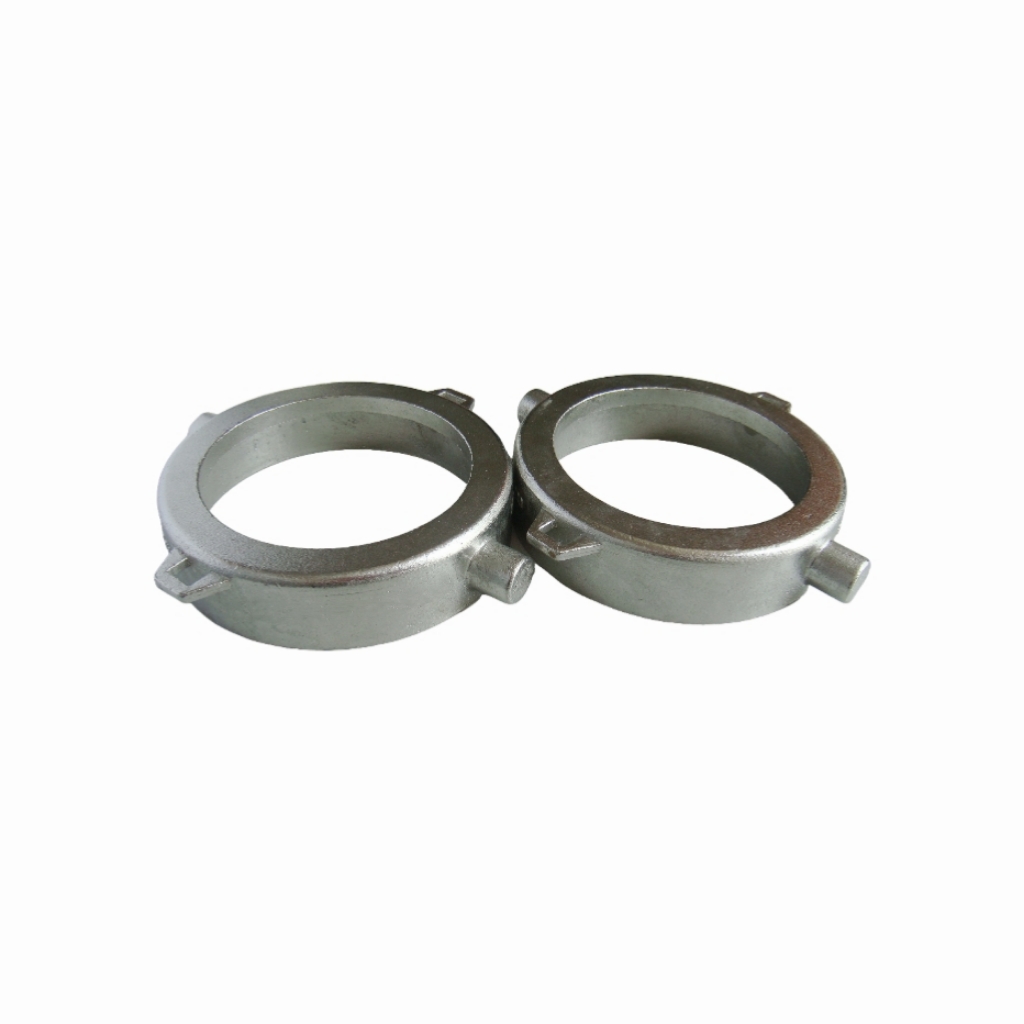
Standard aluminum or zinc die casting often falls short for components subjected to extreme mechanical stress, highly corrosive environments, or stringent sanitation requirements. Manufacturers need a robust alternative to handle these intense operational demands. You cannot compromise on material integrity when building parts for marine, medical, or aerospace applications.
While standard die casting is dominated by low-melting-point non-ferrous metals, true high-pressure Stainless Steel Die Casting is a highly specialized process. It requires advanced high-temperature tooling to handle ferrous metals melting above 1,300°C. Producing these parts requires immense precision, specialized foundry equipment, and rigorous thermal management.
When engineered correctly, it delivers near-net-shape parts with superior mechanical properties, eliminating expensive secondary machining for high-volume production runs. This guide provides an evidence-based framework for evaluating if this process aligns with your project’s technical and commercial requirements. You will learn how to assess material grades, apply strict design rules, and mitigate common manufacturing defects.
Key Takeaways
**Material Superiority:** Offers unparalleled tensile strength and corrosion resistance, quantifiable by PREN (Pitting Resistance Equivalent Number) values.
**Process Reality:** Requires significant upfront tooling investment due to high melting temperatures; ROI is typically realized only in high-volume, high-complexity production runs.
**Precision Limits:** Capable of tight tolerances (up to ±0.005 inches per inch) and excellent surface finishes when stringent DFM guidelines are followed.
**Defect Control:** Success relies entirely on advanced thermal management and gating design to prevent shrinkage and cold shuts inherent in ferrous metal flow.
The Engineering Reality of Stainless Steel Die Casting
Clearing the Industry Confusion
Many engineers mistakenly conflate high-pressure ferrous casting with investment casting. We must clearly separate the two. Investment casting, or lost-wax casting, relies on destructible ceramic shell molds. You use it primarily for low-to-medium production volumes. It allows for complex internal geometries but demands significant manual labor and long cycle times.
True high-pressure die casting (HPDC) of stainless steel is an entirely different beast. It utilizes specialized, permanent refractory metal molds. Foundries often machine these dies from advanced materials like molybdenum or tungsten alloys. These exotic tool steels withstand the extreme thermal shock generated when molten iron alloys enter the cavity. This process is highly automated, exceptionally fast, and intended strictly for massive production runs.
The Process Mechanics
To create these parts, foundries inject liquid ferrous alloys into the die cavity at extraordinary speeds. They apply extreme pressures, typically ranging from 150 to 1,200 bar. This aggressive injection ensures the molten metal completely fills complex geometries before it solidifies. The rapid cooling rate produces a fine-grained microstructure, giving the final component excellent mechanical properties.
You must carefully control the injection speed to prevent turbulence. If the metal flows too quickly, it traps air. If it flows too slowly, you risk premature freezing. Engineers use advanced computational fluid dynamics (CFD) software to simulate this filling process, ensuring a smooth, predictable flow front.
The Tooling Trade-off
We must acknowledge the elephant in the room: tooling costs. Dies capable of surviving liquid ferrous injection require an enormous upfront investment. Molybdenum dies are incredibly difficult to machine and degrade faster than standard H13 steel dies used for aluminum.
You should frame this decision as a strict volume versus machining cost equation. If you need 500 parts, CNC machining or investment casting makes sense. If you need 50,000 parts, the massive reduction in per-part cycle time and minimal secondary processing easily justifies the initial die investment.
Core Commercial and Technical Benefits
Exceptional Corrosion Resistance (The PREN Metric)
We need to move beyond generic "rust-proof" claims. Stainless alloys rely on a complex chromium oxide passivation layer. When exposed to oxygen, this microscopic layer forms automatically, sealing the underlying iron away from corrosive elements. If scratched, it heals itself rapidly.
Engineers quantify this resistance using the Pitting Resistance Equivalent Number (PREN). You calculate it based on chromium, molybdenum, and nitrogen content. Grades boasting a high PREN (greater than 40) effortlessly withstand harsh 1000ppm chloride environments. This makes them indispensable for deep-sea equipment and aggressive chemical processing plants.
Secondary Machining Reduction for High Volumes
Achieving net-shape or near-net-shape features directly impacts your bottom line. High-pressure casting can form complex geometries right out of the mold. You can cast internal threads, hex drives, and intricate splines without touching a milling machine.
By eliminating 30% to 50% of secondary CNC machining steps, you drastically accelerate production timelines. You no longer need to move parts between multiple workstations. This streamlined workflow reduces labor costs, minimizes machine wear, and cuts down on fixture tooling expenses.
Superior Mechanical Properties
Aluminum and zinc fail under extreme mechanical stress. They experience severe creep and plastic deformation at high temperatures. In contrast, ferrous castings maintain their structural integrity in brutal environments.
They deliver exceptional tensile strength and impact resistance. You will find them thriving in high-pressure steam valves, heavy-duty engine mounts, and industrial fluid control systems where softer metals would instantly warp or fracture.
Sustainability & Lifecycle
Modern manufacturing demands sustainable practices. This metal boasts an impressive global recycling rate exceeding 85%. At the end of a product's lifecycle, you can melt it down and reuse it without any degradation in mechanical properties.
Furthermore, high-pressure casting significantly reduces raw material waste compared to subtractive manufacturing. CNC machining a block of steel often turns 60% of the material into metal chips. Casting injects only the necessary amount of metal into the cavity, making it a highly resource-efficient process.
Evaluating Stainless Steel Grades for Die Casting
Selecting the right alloy dictates the success of your project. We have organized the most common families into a comparison matrix chart to help engineering buyers match material properties to application realities.
Alloy Family
Specific Grades
Key Characteristics
Ideal Applications
Austenitic
304
The baseline standard. Offers high ductility, excellent general corrosion resistance, and non-magnetic properties. Easy to cast and polish.
Food-grade processing equipment, basic medical devices, architectural hardware.
Austenitic
316 / 316L
Includes 2-3% Molybdenum. Delivers vastly enhanced chloride resistance. "L" variant features lower carbon for better welding.
Marine hardware, offshore oil rigs, harsh chemical processing plants.
Martensitic
410 / 416
Prioritizes high mechanical strength, hardness, and wear resistance over absolute corrosion resistance. Magnetic and prone to fracture rather than bending under extreme yield stress.
Delivers an optimal balance of intense mechanical strength and reliable corrosion resistance. Can be heat-treated to achieve specific hardness levels.
Aerospace structural components, military hardware, high-stress gears.
DFM (Design for Manufacturability) Guidelines for Stainless Parts
You cannot use standard aluminum DFM rules for high-temperature ferrous alloys. The thermal dynamics behave entirely differently. Following these specific guidelines ensures your Stainless Steel Die Casting project succeeds without destroying the expensive tooling.
Wall Thickness & Flow Dynamics: Due to the rapid cooling rate of ferrous metals, you must maintain uniform wall thickness. Variations in thickness cause uneven cooling, leading to severe warp and internal shrinkage. Keep transitions gradual if thickness changes are unavoidable.
Draft Angles: Ferrous alloys exhibit higher thermal contraction rates during solidification than aluminum or zinc. Address the necessity of larger draft angles. We recommend a minimum of 3 to 5 degrees per side to allow smooth part ejection without scoring the die surface.
Fillet Radii: Sharp corners act as stress concentrators, both for the cast part and the tool itself. Recommend minimal fillet radii between 0.4mm and 0.8mm. Generous fillets drastically reduce stress concentrations and prevent heat-checking (surface cracking) in the expensive molybdenum tooling.
Ribs and Bosses: Solid, thick sections invite thermal defects during the cooling phase. Outline how to use structural ribs instead. Coring out thick areas and using intersecting ribs maintains part rigidity without increasing overall mass. Keep rib thickness to roughly 60% of the adjoining wall thickness.
Defect Mitigation: A Quality Assurance Framework
Even with perfect DFM, manufacturing high-melting-point alloys presents significant challenges. Success relies on anticipating defects before they happen. We present this "Root Cause & Engineering Solution" matrix to demonstrate practical manufacturing authority.
Defect Type
Visual Identification
Root Cause Analysis
Engineering Solution
Shrinkage Cavities
Jagged, irregular holes typically found in the thickest sections of the cast part.
Improper gating design leading to isolated liquid pools during solidification. The metal shrinks as it cools, leaving a void if no additional liquid feeds the area.
Deploy advanced thermal modeling software. Optimize riser placement to feed thick sections continuously. Implement localized die cooling channels to force directional solidification toward the gating system.
Porosity (Gas Entrapment)
Smooth, spherical bubbles visible on the surface or detected via X-ray internally.
Turbulent metal flow at high injection speeds traps air. Alternatively, moisture left inside the die cavity flashes into steam upon contact with molten metal.
Implementation of vacuum-assisted technology to evacuate air before injection. Enforce rigorous humidity controls in the foundry environment. Optimize gate speeds to ensure a laminar flow front.
Cold Shuts
Distinct lines or cracks on the surface where two metal fronts failed to fuse completely.
Two metal flow fronts meet after dropping below their optimal fusion temperature. Sluggish injection or an overly complex die cavity layout causes premature freezing.
Precise control of pouring temperatures. Optimize gating locations to ensure rapid, uniform cavity filling. Increase injection pressure to force the metal fronts together while still in a fully liquid state.
High-Performance Applications and Shortlisting Logic
Where the ROI is Proven
Industries dealing with extreme operating environments extract the maximum value from this process. The high upfront tooling costs easily justify themselves when component failure means catastrophic system downtime.
Marine & Offshore: Impellers, valve bodies, and high-pressure pipe fittings require decades of operational life in saltwater. Austenitic grades thrive here, completely ignoring chloride pitting that destroys lesser metals.
Medical & Surgical: Orthopedic implants, bone saws, and surgical instruments require repeated high-temperature autoclave sterilization. The material maintains strict sanitation standards without degrading or losing its sharp edges.
Industrial Fluid Control: High-pressure pump housings and flow-control manifolds for the petrochemical sector. These components endure abrasive slurry and highly acidic chemicals at extreme pressures safely.
Shortlisting Logic (Go/No-Go Criteria)
Before contacting a foundry, run your project through this strict evaluation framework. It saves time and prevents costly misalignments.
Production Volume Check: Do you have a production volume exceeding 10,000+ units annually? If No: Evaluate investment casting or direct CNC machining. The tooling cost will break your budget. If Yes: The process makes excellent financial sense. Proceed to the next step.
Geometric Complexity Check: Does the part require thin walls and tight tolerances (up to ±0.005" per inch) that CNC machining cannot produce economically? If No: Simple geometries might be cheaper to extrude or stamp. If Yes: Proceed with die casting. The ability to cast net-shape internal features offers massive value here.
Material Demand Check: Do aluminum or zinc fail your mechanical stress tests? If No: Stick to standard non-ferrous casting. Tooling is much cheaper. If Yes: Ferrous high-pressure injection is your designated path forward.
Conclusion
You must treat high-pressure ferrous casting as a targeted engineering solution, not a universal manufacturing method. It is not a direct replacement for standard aluminum casting or traditional sand casting. It serves as a highly specific, high-ROI solution strictly for complex, high-volume ferrous parts that demand immense durability and tight tolerances.
We advise engineering buyers to engage with a specialized foundry during the early CAD phase. Do not wait until the design is locked. Early DFM audits dictate whether the part geometry is viable for high-pressure injection or requires structural modification. Adjusting wall thicknesses and draft angles early saves tens of thousands of dollars in tooling rework down the line.
FAQ
Q: Can you really die cast stainless steel, or is it just investment casting?
A: Yes, true high-pressure die casting for steel exists, though it is rare. Unlike investment casting which uses disposable wax and ceramic molds, HPDC injects liquid metal under extreme pressure into permanent, reusable molds made of refractory metals like molybdenum to withstand the severe thermal shock.
Q: What is the typical tooling lifespan for a stainless steel die?
A: The lifespan is significantly shorter than aluminum dies. Extreme thermal shock from 1,300°C liquid metal limits die life, often capping at 5,000 to 20,000 shots depending on geometry. Foundries necessitate strategic maintenance, localized cooling, and replaceable tool steel inserts to manage these costs.
Q: How does the cost compare to CNC machining billets?
A: It relies on a breakeven point. You face a high initial CapEx for the refractory metal tooling. However, once running, the piece-price drops exponentially compared to CNC machining. For volumes exceeding 10,000 units, the elimination of raw material waste and long machining hours makes casting far cheaper.
Nanjing Best International Co., Ltd. is a reputable manufacturer and supplier of industrial components based in China. Our factory is situated in Changzhou City, which can be conveniently reached within 1.5 hours by car from Nanjing.