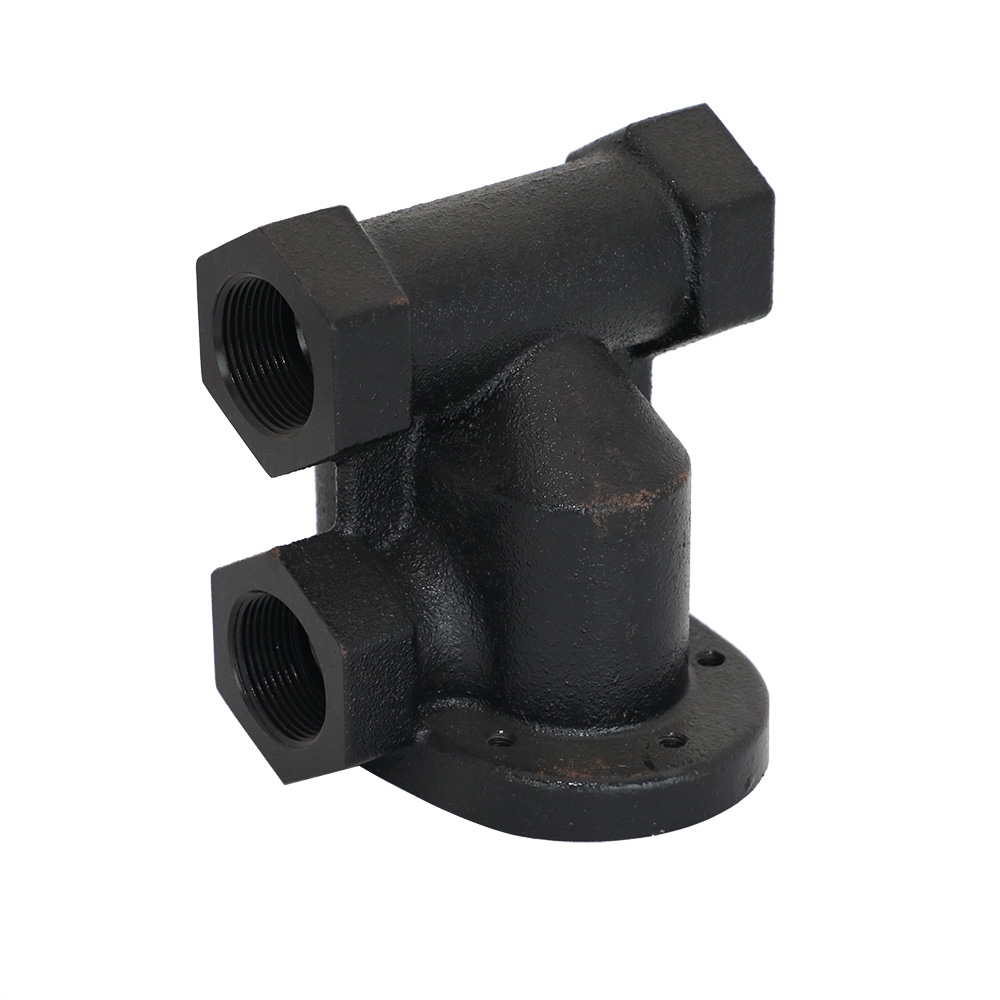
Engineering modern industrial components requires a careful balance. You must weigh initial tooling investments against long-term material performance. You also need reliable production scalability. For many heavy machinery and automotive applications, you will find a proven solution waiting for you. Combining gray cast iron—celebrated for vibration damping and massive compressive strength—and sand casting processes remains the undisputed manufacturing standard. Today, over 70% of heavy-duty cast applications rely on this precise combination. Sand casting provides remarkable geometric flexibility. It keeps your barrier to entry exceptionally low. But is it right for your exact mechanical requirements? We built this evidence-based, decision-stage guide to help you evaluate your options. You will learn how to align mechanical constraints, project budgets, and production volumes. We will show you exactly when Gray Iron Sand Casting fits your engineering goals. We will also tell you when you should look elsewhere. Let's explore the core properties and process dynamics.
Key Takeaways
Optimal for Static Loads: Gray iron's compressive strength is at least 3x its tensile strength, making it ideal for machine bases, engine blocks, and pump housings.
Inherent Limitations: Microstructural graphite flakes provide superior machinability and vibration damping but cause brittleness, making it unsuitable for components facing high-impact dynamic stress.
Process Compatibility: Sand casting is the optimal method for gray iron; alternatives like investment casting are often unviable because graphite expansion during solidification can fracture ceramic shells.
The Engineering Case: Aligning Material Properties with Performance Outcomes
Engineers choose materials based on underlying microstructural properties. Gray iron contains a very specific chemical makeup. It typically includes 2.5% to 4% carbon and 1% to 3% silicon. This unique chemical composition forms distinctive graphite flakes during the solidification phase. These flakes dictate exactly how the metal performs under heavy industrial stress.
Vibration Damping
The internal graphite flakes interrupt mechanical stress waves. They act as natural shock absorbers inside the metal matrix. They absorb kinetic energy and quickly convert it to heat. This inherent damping prevents harmonic resonance in large structures. You often see this massive benefit in CNC machine bases. The vibration absorption drastically extends cutting tool life. It also ensures higher precision on the manufacturing floor.
Thermal Cycling Resilience
High thermal conductivity serves as another massive operational advantage. Gray iron dissipates heat rapidly and evenly across its surface. It prevents localized heat spots from forming. This thermal stability prevents severe warping or distortion. Extreme temperature fluctuations rarely compromise its structural integrity. Automotive engineers rely heavily on this physical property. They use it extensively for heavy-duty engine blocks and industrial heat exchangers.
Compressive Superiority
You must understand the stark strength contrast. The metal has notably low tensile strength. It remains vulnerable to pulling and stretching forces. The graphite flakes actually create natural fault lines under tension. However, its compressive strength is massive. It strongly resists crushing forces. Gray iron handles enormous static loads perfectly. A solid gray iron base can support heavy equipment for decades without yielding.
Evaluating Sand Casting for Gray Iron: Economics and Realities
We must evaluate why sand molds pair so beautifully with this specific metal. The underlying manufacturing economics often drive the initial engineering decision. We use sand because it provides unparalleled flexibility.
The Tooling Cost Advantage
High tooling investments can sink a project early. Green sand and resin sand molds completely change this financial equation. They drastically lower your barrier to entry. Creating a wood, plastic, or aluminum pattern costs a fraction of permanent steel dies. You can run rapid prototyping efficiently. Small-to-medium batch runs become highly economical. This low overhead makes Gray Iron Sand Casting highly competitive against complex die casting methods. You save capital upfront.
The "High Fluidity" Synergy
Gray iron possesses incredibly high fluidity in its molten state. It flows like water at high temperatures. It pairs perfectly with simple, gravity-fed sand molds. The molten metal easily fills complex internal geometries. You do not need expensive high-pressure injection systems. This natural flow prevents premature freezing inside the mold cavity. It guarantees excellent detail reproduction on intricate parts.
Acknowledging Process Limitations (Risk Transparency)
Every manufacturing process carries inherent risks. We must acknowledge these realities clearly to prevent costly failures.
Porosity and Shrinkage: Foundry workers typically hand-pour these molds at standard atmospheric pressure. This creates a slightly higher risk of internal porosity. Air pockets can get trapped inside the solidifying metal. Engineers must design proper gating and risering systems to mitigate this risk.
Surface Finish Realities: Sand casting inherently leaves a distinct surface texture. The rough sand grains imprint directly onto the metal surface. You must plan for secondary operations. CNC post-machining remains mandatory for critical mating surfaces and tight bearing fits.
Material Alternatives: Gray Iron vs. Steel and Ductile Iron Castings
Designers constantly compare metal casting options. You must weigh the fundamental metallurgical differences. We often start our evaluation at the critical 2% carbon cutoff line.
The 2% Carbon Cutoff (Steel vs. Iron)
Carbon content dictates the entire material classification. Steel contains less than 2% carbon. Cast irons contain more than 2% carbon. This simple boundary changes everything about material behavior.
When to choose Steel: Select steel for dynamic loading. Choose it for high-impact environments. Steel provides a superior strength-to-weight ratio. Use it for critical safety components like aerospace linkages or bridge joints. Steel bends before it breaks.
When to choose Gray Iron: Choose it for massive static loads. Select it for vibration-heavy environments. It excels when you face extreme budget constraints. Use it when the component will not face sudden, violent impacts.
Gray vs. Ductile Iron
If you need iron, you must choose between gray and ductile forms. The difference lies entirely in the microscopic graphite structure. Gray iron features sharp graphite flakes. Ductile iron contains round graphite nodules or spheres.
The spherical shape in ductile iron stops crack propagation. This micro-geometry gives ductile iron much higher yield strength. It can withstand severe bending and impact without fracturing. If your project requires these safety margins, ductile iron easily justifies its higher production cost. We use ductile iron for heavy-duty suspension arms and gears.
Material Comparison Summary Chart
Material Feature
Gray Cast Iron
Ductile Cast Iron
Cast Steel
Graphite Structure
Flakes
Nodules / Spheres
None (Low Carbon)
Primary Strength
High Compressive
High Yield / Tensile
High Tensile / Impact
Vibration Damping
Excellent
Moderate
Poor
Machinability
Exceptional (Self-lubricating)
Good
Fair to Difficult
Best Application
Machine Bases, Pump Housings
Gears, Suspension Parts
Turbines, Safety Joints
Specifying the Right Grade: A Procurement & Design Framework
You must specify the correct material grade. Procurement teams and design engineers need a clear shortlisting logic. Industry standards exist globally to help you. They include the European EN-GJL framework and the ASTM Class equivalents. We always balance required tensile strength against necessary machinability.
Grade 150 (Class 20): This grade provides maximum vibration damping. It offers the absolute easiest machinability. The flakes are large and abundant. However, it possesses the lowest tensile strength. You should use it strictly for non-structural motor housings or light-duty protective covers.
Grade 200/250 (Class 30/35): Engineers consider this the industry standard "sweet spot." It delivers beautifully balanced mechanical properties. It offers sufficient strength and reasonable machining speeds. The pearlite and ferrite matrix provides excellent durability. Specify this grade for pump bodies, industrial gearboxes, and automated machinery bases.
Grade 300 (Class 40): This represents the highest strength tier for standard gray iron. Foundries design it for extremely heavy static loads. It comes with clear tradeoffs. It has noticeably reduced damping capabilities. Furthermore, it introduces much harder machining requirements. Tool wear increases significantly. Choose this only when structural rigidity outweighs tooling longevity.
Selecting a higher grade does not automatically mean better performance. You must match the grade precisely to the applied physical load.
Implementation Risks: Design Rules for Gray Iron Sand Casting
Poor part design causes expensive foundry failures. You can avoid these pitfalls easily. Apply strict design rules before finalizing your CAD files. We recommend involving a metallurgist early.
Wall Thickness Transitions
We strongly warn against abrupt geometrical changes. Never design a thick wall merging suddenly into a thin wall. Thick sections cool much slower than thin sections. These differing cooling rates cause severe internal thermal stress. They literally pull the solidifying metal apart internally. This creates dangerous shrinkage cavities and hot tears. Always use generous radii. Ensure smooth, gradual tapers between varying cross-sections.
Draft Angles and Machining Allowances
Set realistic expectations for your design team. Vertical walls require appropriate draft angles. Sand patterns must pull cleanly from the packed mold without tearing the sand. Provide at least a 1-to-2-degree draft angle for pattern removal. Deep draws require even more draft.
Additionally, plan your extra material allowances carefully. You need extra stock for post-cast machining. A rough sand surface cannot hold tight tolerances. If you require a ±0.01 mm flatness, you must add adequate machining stock to the raw cast geometry. Plan for at least 2 to 3 millimeters of extra material on critical faces.
Prototyping with 3D Printed Sand Molds
You do not always need expensive wooden patterns on day one. Modern foundries use advanced hybrid approaches. They utilize 3D-printed sand molds. Automated systems print the sand layer by layer. This allows rapid validation. You can pour test parts in days instead of weeks. This tool-less approach verifies your geometry. Once validated, you can commit confidently to permanent wood or metal patterns for higher production volumes.
Decision Checklist: Is Gray Iron Sand Casting Your Next Step?
Engineering decisions require definitive, objective parameters. Use this strict go/no-go evaluation framework to finalize your manufacturing choice.
Choose YES if:
The part undergoes strictly static loading.
The assembly requires heavy vibration absorption.
The design features complex internal cavities requiring core structures.
Budget constraints demand very low initial tooling costs.
The production run involves small to medium batch sizes.
Choose NO if:
The component faces dynamic impacts or sudden mechanical shocks.
The project requires a very high strength-to-weight ratio. Aerospace landing gear serves as a prime example of a bad fit.
The final part needs ductility to bend under severe stress without snapping.
You need a smooth, mirror-like finish directly out of the primary mold.
Conclusion
This traditional manufacturing process remains a highly specialized industrial asset. Gray iron poured into sand molds is not an outdated legacy fallback. It offers a precise, cost-effective solution for complex, vibration-prone components carrying heavy static weights. It balances economy with incredible physical stability.
Your next steps should involve proactive validation. First, identify your strict load limits and thermal requirements. Second, prioritize your surface finish needs and calculate acceptable machining allowances. Third, involve foundry experts early in the design phase.
We encourage engineering teams to submit their CAD files for a thorough manufacturability review. Do this before finalizing your blueprints. Discuss your gating design and material grade selection early. Early collaboration ensures a structurally sound component for your next major project.
FAQ
Q: Why is investment casting generally not recommended for gray cast iron?
A: The graphite expansion during the cooling and solidification phase causes severe issues. As the microstructural graphite flakes form, the metal slightly expands. This internal pressure typically fractures the rigid ceramic shell used in investment casting. Sand molds, however, offer enough physical compliance to absorb this expansion without failing entirely.
Q: What is the typical dimensional tolerance for a gray iron sand casting?
A: Standard foundry tolerances generally fall between ISO 8062 CT8 and CT10 for sand casting. Because the process involves shifting sand and manual pouring, it cannot hold extremely tight precision directly from the mold. Critical dimensions, mating surfaces, and bearing fits will always require secondary CNC machining.
Q: How does the compressive strength of gray iron compare to its tensile strength?
A: The compressive strength of gray iron is typically three to four times higher than its tensile strength. The graphite flakes act as weak points when pulled, but they easily support heavy crushing forces. This unique physical ratio dictates its widespread use in load-bearing structural bases and massive equipment frames.
Q: Can gray iron sand castings be welded?
A: Yes, you can weld them. The metal possesses low electrical resistivity. However, welding requires strict thermal control. You must apply specific pre-heating protocols and ensure highly controlled, slow cooling. If you fail to control the cooling rate, brittle cracking will rapidly occur around the heat-affected weld zone.
Nanjing Best International Co., Ltd. is a reputable manufacturer and supplier of industrial components based in China. Our factory is situated in Changzhou City, which can be conveniently reached within 1.5 hours by car from Nanjing.