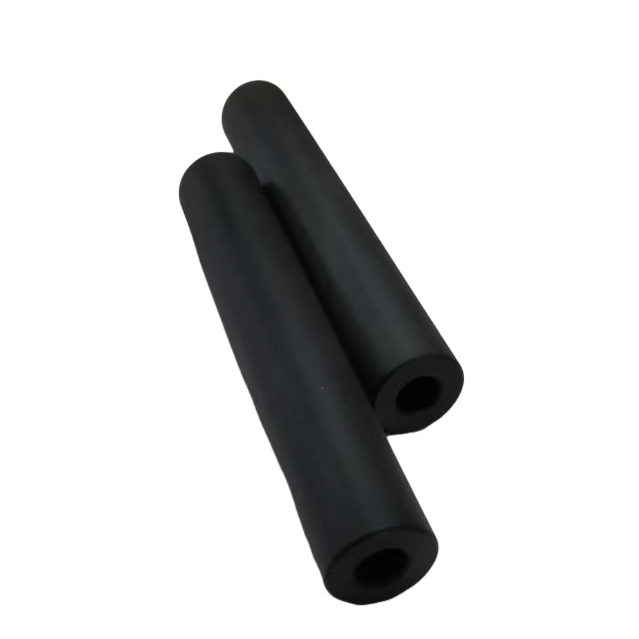
Do your precise plastic parts warp unexpectedly days after production? As engineers who frequently design tight-clearance fluid handling components and pump impellers, we see this exact issue constantly. When a cutting tool removes surface layers, it inadvertently releases hidden internal stresses trapped inside the polymer since its initial creation. This sudden disruption causes severe distortion, ultimately ruining carefully planned tolerances and leading to costly assembly failures. In the dynamic field of custom POM machining, Polyoxymethylene—widely known as Acetal or Delrin—is a go-to material for professionals requiring high stiffness, low friction, and exceptional dimensional stability. However, manufacturing flawless components comes with a hidden challenge: managing this latent internal tension. Whether your shop floor is working with extruded bar stock or molded blanks, understanding proper thermal treatment is absolutely non-negotiable for commercial success.
Key Takeaways
Stress Relief is Mandatory: Annealing relieves internal stresses trapped inside the material during the initial extrusion or injection molding processes. This thermal treatment is critical for preventing unpredictable warping both during and after the manufacturing cycle.
Timing is Everything: To achieve maximum dimensional stability, the optimal manufacturing workflow must follow a strict sequence: Rough Machining, followed by Annealing, and finally Finish Machining. Reversing or altering this order severely compromises part integrity.
Controlled Temperatures: Standard industrial practices dictate that Acetal should typically be annealed at temperatures ranging from 140°C to 150°C, roughly equivalent to 284°F to 302°F. Facilities generally execute this using either a highly calibrated air circulating oven or a specialized oil bath.
Cooling Rate Matters: The cooling phase is arguably more critical than the heating phase. Rapid cooling induces thermal shock and reintroduces stress, making a slow, meticulously controlled cool-down phase required to maintain structural equilibrium.
Material Variations: Whether an engineer is specifying standard white stock or custom matte black profiles, the fundamental thermodynamic principles of annealing remain consistent. Specific soaking times and thermal profiles, however, must be adjusted based on cross-sectional thickness and pigment additives.
The Role of Internal Stress in Plastic Machining
What Makes Acetal Unique?
Polyoxymethylene is a highly crystalline engineering thermoplastic characterized by tightly packed polymer chains. This unique molecular architecture gives the material its renowned mechanical properties, including exceptional stiffness, high tensile strength, a low coefficient of friction, and excellent wear resistance. Yet, this high degree of crystallinity—often hovering between 75 percent and 85 percent—acts as a double-edged sword during the manufacturing phase.
During the initial production of raw stock, the material undergoes significant thermal transitions. As the molten polymer cools, the outer layers exposed to the cooling medium solidify much faster than the insulated inner core. Consequently, this differential cooling rate causes the polymer chains to crystallize unevenly. The outer skin of the material becomes highly compressed, while the inner core remains under severe tensile strain. This inherent imbalance traps substantial internal stresses within the raw material. These forces lie completely dormant until the physical structure is violently altered by a cutting tool.
How Machining Induces and Releases Stress
Imagine a CNC machinist setting up a perfectly trued block of plastic for a heavy facing operation. As the end-mill begins shearing away the hardened outer skin, the material's internal forces—previously held in a delicate physical equilibrium—are unleashed. The hardened outer layer of the extruded stock functions much like a tight structural corset, holding the internal tensile stresses in check.
Specifically, as the cutting tool removes this restraining layer asymmetrically, the previously contained internal stresses are suddenly allowed to release. The material immediately seeks a new physical equilibrium. This reaction physically manifests as bowing, twisting, or warping on the machine table. For instance, milling a deep pocket into only one side of a plate leaves the uncut side with its compressive skin intact, while the pocketed side loses its restraint. This imbalance forces the entire plate to curve like a banana. This phenomenon clearly explains why immediate finish machining on raw stock consistently fails tight tolerance checks, regardless of how rigid your workholding setup happens to be.
Why Annealing Before Finish Machining is Essential
Achieving Tight Tolerances for Precision Components
In modern engineering applications, ranging from aerospace fuel system components to fluid metering pump gears, the dimensional requirements placed on plastic components are increasingly stringent. Achieving and maintaining tolerances of plus or minus 0.001 inches is practically impossible if the material is actively fighting against its own internal geometry. Annealing serves as a crucial thermal reset button for the polymer.
By elevating the temperature of the plastic to just below its melting point, the applied thermal energy allows the rigid polymer chains to mobilize slightly. This critical mobility enables the chains to slide past one another and reorganize into a more relaxed, lower-energy state. This relaxed state ensures that when the final, delicate cuts are made by the lathe or mill, the material remains entirely passive. The tool cuts exactly where programmed without the material springing back.
Industry Trend Analysis: The Shift Toward Thermal Management
Recent market analyses reveal a massive shift in high-stakes sectors like electric vehicle manufacturing and advanced medical fluid handling. The demand for ultra-precise polymer components has forced forward-thinking facilities to abandon outdated thermal guesswork. Instead, the industry standard now demands automated, data-driven thermal profiling to guarantee absolute dimensional stability. Precision no longer relies solely on the sharpness of the cutting tool; it hinges entirely on mastering internal thermodynamics before the final chip falls. Engineers are increasingly writing strict thermal treatment certifications directly into their procurement contracts to mitigate downstream assembly failures.
Preventing Post-Machining Warpage
The destructive consequences of skipping the thermal stress relief process are not always immediately apparent on the shop floor. In many cases, a freshly machined component might pass initial quality control inspections while still clamped in the fixture or resting in a temperature-controlled metrology lab. However, un-annealed plastic remains dimensionally volatile.
Furthermore, when these parts are shipped to different climates, exposed to operational heat in an engine bay, or simply left on a warehouse shelf for several weeks, the latent internal stresses will continue to slowly release. This phenomenon, known as cold flow distortion, results in disastrous post-machining warpage. A pump impeller that measured perfectly round on Tuesday may become slightly oval by next month, leading to catastrophic vibration in the field. By artificially forcing the material to relax through controlled thermal exposure, manufacturers guarantee the long-term dimensional stability and functional reliability of their commercial components.
Material Selection and Parameter Guide
Selecting the right raw stock dictates your entire thermal strategy. Different profiles and pigmentations absorb and retain heat differently. To help engineers bridge the gap between theoretical thermal dynamics and practical shop-floor procurement, we have outlined the critical parameters for common industrial profiles below.
High crystallinity, excellent fatigue resistance, durable bar structure.
Requires uniform heat distribution. The hexagonal geometry means corners heat faster than the core. Slow ramping is essential for precision machined POM parts to prevent corner degradation.
Carbon black pigment integration, high UV resistance, customized to specific drawing tolerances.
Pigments act as nucleating agents. A black pom rod often requires a 10 percent increase in soaking time to ensure complete thermal penetration compared to natural white stock.
Step-by-Step Guide to the Thermal Stress Relief Process
Preparation and Cleaning
The thermal treatment process must begin with rigorous preparation. Introducing contaminated parts to high temperatures can cause permanent degradation of the material surface. All POM machined parts must be thoroughly cleaned to remove any residual cutting fluids, coolant oils, or operator fingerprints. If hydrocarbon-based coolants are baked into the surface, they can cause localized discoloration or chemical breakdown of the polymer matrix.
In addition, the physical orientation of the parts during heating is vital. Picture a basket of delicate pump gears dumped carelessly into an oven. At 150°C, the plastic becomes highly pliable, causing the components to sag and permanently deform under their own weight. Therefore, parts must be meticulously arranged on flat, supportive racks or custom fixtures that distribute weight evenly.
Heating Parameters: Air Oven vs. Oil Bath
Manufacturers primarily rely on two methods for thermal treatment: air circulating ovens and heated oil baths. The target temperature for standard grades is strictly maintained between 140°C and 150°C. Exceeding 160°C risks melting the crystalline structure, while dropping below 135°C provides insufficient kinetic energy for stress relief.
Air Circulating Ovens: This is the most common and hygienic method found in modern machine shops. Programmable convection ovens circulate heated air evenly across the parts. While air is a poorer conductor of heat than liquid, requiring longer cycle times, it leaves the components completely clean and dry upon removal.
Oil Baths: Submerging parts in a high-temperature silicone or mineral oil bath offers rapid and highly uniform heat transfer. The liquid environment eliminates dangerous hot spots and reduces overall heating time. However, this method necessitates a rigorous post-annealing ultrasonic cleaning process to remove the stubborn oil residue.
Soaking Time Guidelines
The duration for which the material must be held at the target temperature—known as the soaking time—is directly proportional to the thickest cross-section of the part. Heat must penetrate from the outer surface to the absolute center of the core to ensure total stress relief.
A standard industrial rule of thumb dictates a heating time of approximately 5 to 10 minutes per millimeter of wall thickness. This translates to roughly 2 to 2.5 hours per inch of material thickness. It is crucial for operators to note that thermal transfer in plastics is non-linear. Thicker parts require exponentially more time. Rushing the soaking phase results in a component that is safely annealed on the outside but still highly stressed and volatile on the inside.
The Critical Cooling Phase
The most devastating mistake made during the entire manufacturing cycle occurs at the very end: improper cooling. Simply turning off the oven and opening the door to ambient shop air will induce severe thermal shock. The outer skin of the plastic will contract rapidly while the core remains expanded. This violent temperature differential immediately reintroduces the very internal stresses the entire process was designed to eliminate.
Cooling must be managed with absolute precision. The temperature should be ramped down slowly, typically at a strict rate of 5°C to 10°C per hour, until the parts reach ambient room temperature. For thick-walled pump housings or heavy manifolds, this controlled cooling cycle can take anywhere from 12 to 24 hours.
The Ideal Workflow: Rough Machining, Annealing, and Finish Machining
What is Rough Machining?
To maximize the efficacy of thermal stress relief, the raw material must first be brought close to its final dimensions. Rough machining involves aggressive material removal strategies designed to clear out the bulk of the raw stock quickly using high feed rates. Because the material is un-annealed at this initial stage, experienced machinists fully expect that the part will warp or distort as the internal stresses are violently released.
To account for this inevitable movement, the CNC program is designed to leave a protective envelope of excess material on all surfaces. This envelope typically ranges from 0.030 to 0.060 inches. This excess stock acts as a physical buffer, ensuring that even if the part twists significantly during the roughing phase, there is still enough material remaining to clean up the surfaces later.
Transitioning to the Final Cut
Once the rough-machined part has completed its full heating, soaking, and slow-cooling cycle, it transitions back to the CNC machining center. The material is now in a structurally dead, stress-free state. When the part is re-fixtured, the operator will likely notice that the rough dimensions have shifted. Holes may be slightly out of round, and flat surfaces may be slightly convex. This is perfectly normal and proves that the thermal process successfully released the trapped energy.
The machine then executes the finish machining passes, gently skimming off the remaining envelope of material. Because the internal structure is now completely relaxed, these light finishing cuts generate virtually no new stress. This results in pristine surface finishes and strict adherence to complex Geometric Dimensioning and Tolerancing requirements.
Do's and Don'ts for High-Quality Machined Parts
Executing a flawless thermal treatment cycle requires strict adherence to procedural discipline on the shop floor. Below are the critical best practices and common pitfalls associated with processing high-performance plastics.
Do's for Engineering Success
Do ensure uniform support: Always place parts on flat, perforated metal trays. For long rods or thin-walled cylinders, use custom V-blocks or internal mandrels to prevent gravity-induced sagging at high temperatures.
Do use proper tooling for finish cuts: After thermal treatment, utilize razor-sharp, highly polished High-Speed Steel or micro-grain carbide tooling. Dull tools generate excessive friction, reintroducing localized heat stress right back into the machined surface.
Do calibrate oven temperatures: Industrial ovens frequently develop hidden hot and cold zones. Regularly calibrate the heating chamber using independent thermocouples placed directly next to the actual parts.
Don'ts to Avoid Scrapped Parts
Don't rush the cooling process: Never crack the oven door to speed up production timelines. The financial cost of a scrapped, thermally shocked manifold far outweighs the minor time saved by cutting the cooling cycle short.
Don't stack heavy parts: Avoid piling components on top of one another in the oven basket. The weight of the top parts will permanently compress and deform the softened components resting at the bottom.
Don't skip treatment for asymmetrical parts: If your pump design requires removing 80 percent of the material from one side of a block and only 10 percent from the other, the stress release will be violently unbalanced. Thermal stabilization is absolutely mandatory here.
Challenges and Solutions in Custom Production
Dealing with Thick-Walled Parts
Machining and treating exceedingly thick cross-sections, particularly those greater than 2 inches, presents unique thermal dynamics. Extruded stock of this thickness often suffers from center-line porosity. These are microscopic voids in the exact center of the rod caused by shrinkage during the original extrusion cooling phase at the plastic mill.
When heating thick parts, the thermal gradient between the surface and the core becomes extreme. The optimal engineering solution is stepped heating. The programmable oven is set to hold at intermediate temperatures—for instance, 80°C for 2 hours, then 110°C for 2 hours—before finally reaching the 150°C soaking temperature. This stepped approach allows the core temperature to catch up to the surface temperature safely, entirely mitigating internal micro-fracturing.
Managing Variations: White Natural vs. Pigmented Black
While the base polymer chemistry is identical, variations in raw material formulation subtly alter shop-floor behaviors. Natural stock is highly crystalline and typically white or translucent. Conversely, black variations achieve their matte coloration through the addition of specialized carbon black pigments or industrial dyes.
These pigments act as nucleating agents during the original extrusion process, slightly altering the size of the crystal structures within the plastic matrix. Furthermore, filled variations possess slightly different thermal conductivity rates. While the target temperature of 140°C to 150°C remains generally safe across these variations, highly pigmented or heavily filled profiles demand rigorous testing. Engineers should anticipate modifying soaking times to ensure complete thermal penetration without degrading the surface finish.
Frequently Asked Questions
Can I skip annealing if I am only doing light machining on a rod?
The decision to skip the process depends entirely on the dimensional tolerances required for your specific commercial application. If you are manufacturing a component with loose tolerances and the machining involves perfectly symmetrical material removal, you might be able to bypass the thermal treatment. However, if your pump or valve project demands tight tolerances, skipping this step is highly risky. Even a light turning operation on a lathe removes a portion of the stressed outer layer, causing the remaining internal forces to pull the material out of alignment.
How long does the entire thermal stress relief process take?
The duration of the cycle is directly proportional to the cross-sectional thickness of the material. As a general empirical rule used by seasoned engineers, the heating phase requires approximately 5 to 10 minutes per millimeter of wall thickness. For example, a part that is 1-inch thick typically takes about 2 hours to bring up to 150°C, followed by a 2-hour soaking period. Because the cooling phase must drop at a controlled rate of 5°C to 10°C per hour, cooling alone can take 10 to 15 hours. This results in a total cycle time of 14 to 20 hours.
Will the process change the physical dimensions of my rough-machined part?
Yes, the physical dimensions will absolutely change during the thermal treatment. As the internal stresses are released and the polymer chains relax into a stable configuration, the plastic will shrink, expand, or distort slightly. This is scientifically referred to as stress relaxation. Professional machinists anticipate this behavior by leaving an excess material envelope of 0.030 to 0.060 inches on all surfaces during the roughing phase, providing enough sacrificial material to absorb the distortion.
Is it better to treat the raw black rod before any machining, or after rough machining?
For precision manufacturing, treating the material after the rough machining phase yields the most reliable results. While reputable material suppliers often perform a preliminary cycle on the raw stock to stabilize it for transport, the moment your CNC mill cuts a deep pocket, you expose entirely new stresses. Therefore, the optimal sequence dictates removing 80 percent to 90 percent of the material during the roughing pass, subjecting the part to a full thermal cycle, and only then proceeding with the final precision cuts.
Can I use a standard kitchen oven for this process?
Using a standard kitchen oven is strongly advised against for any professional manufacturing application. Domestic ovens suffer from poor temperature calibration and experience wide temperature swings as the heating elements cycle on and off. These severe fluctuations can easily exceed the melting point of the polymer or cause uneven stress relief. Furthermore, opening the door causes an immediate drop in ambient temperature, subjecting the hot plastic to severe thermal shock. Industrial laboratory-grade equipment is strictly required.
What happens if the temperature fluctuates during the cycle?
Temperature fluctuations during the soaking phase disrupt the uniform relaxation of the polymer chains. If the temperature drops too low, the kinetic energy becomes insufficient to relieve the stress in the core. If it spikes too high, you risk localized melting or surface degradation. In precision engineering, these fluctuations result in inconsistent batches where some parts hold tolerance while others warp days after assembly. This is why continuous data-logging thermocouples are standard in professional facilities.
How does part geometry affect the stress relief cycle?
Complex geometries with varying wall thicknesses pose a significant thermal challenge. Thin sections heat up and cool down much faster than thick, bulky sections on the exact same part. If heated or cooled too quickly, the thin sections will expand or contract at a different rate than the thick sections, inducing massive thermal tearing or warping. Engineers must profile the oven cycle based on the thickest cross-section while ensuring the ramp rates are gentle enough to protect the delicate, thinner features.
Conclusion and Next Steps
Thermal stress relief before finish machining is not just an optional extra step; it is a foundational engineering best practice in high-quality plastic manufacturing. By understanding the behavior of internal stresses and implementing a strict rough-anneal-finish workflow, manufacturers can completely eliminate unpredictable warping and hold incredibly tight tolerances. Proper thermal treatment stabilizes the internal matrix, guaranteeing that your fluid handling components, gears, and precision housings perform flawlessly in their end-use applications. When your project demands uncompromising precision, choosing the right manufacturing partner makes all the difference. Evaluate your current material profiles, upgrade your thermal management protocols, and explore the ideal custom solutions for your specific application at js-nbi.com today.
Nanjing Best International Co., Ltd. is a reputable manufacturer and supplier of industrial components based in China. Our factory is situated in Changzhou City, which can be conveniently reached within 1.5 hours by car from Nanjing.