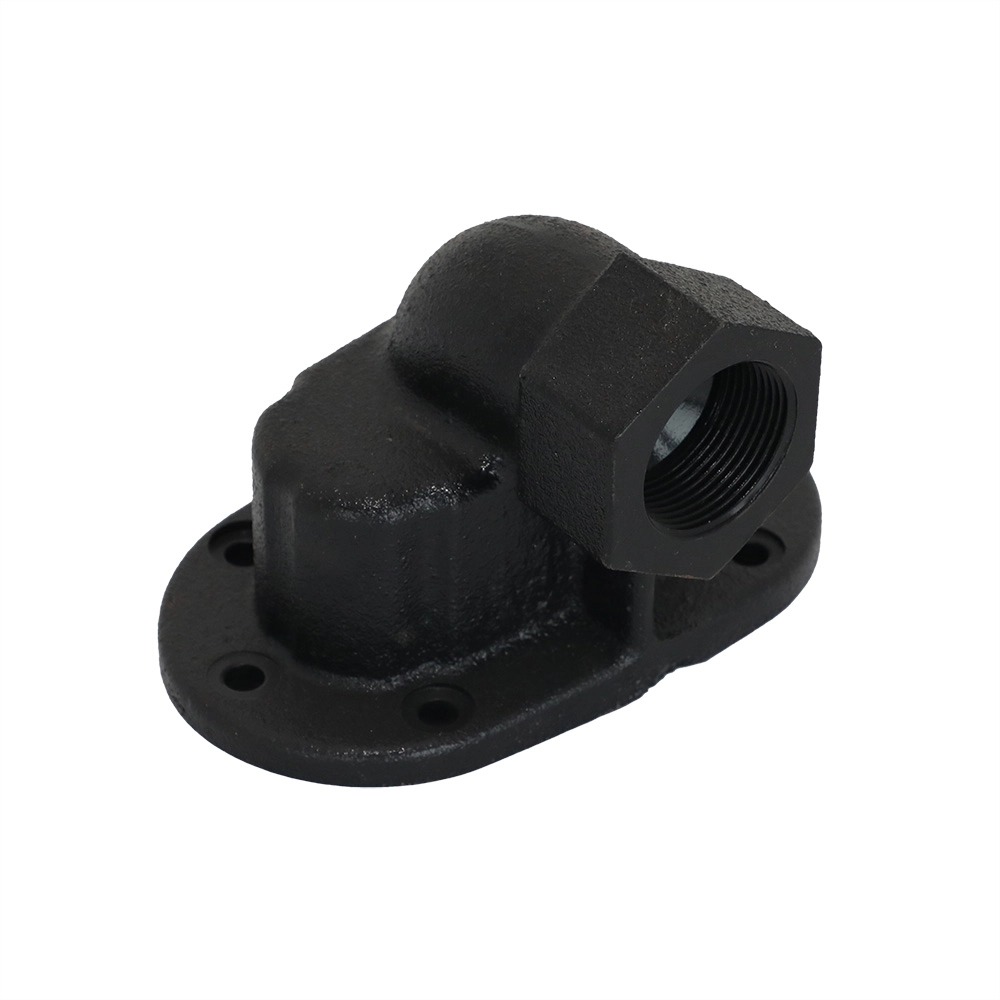
Selecting the optimal metal casting process is a challenging exercise in managing engineering compromises. You will rarely find a universally perfect manufacturing method. Instead, you must identify the most viable process for your specific component lifecycle. Misaligning your part design against the wrong manufacturing method creates severe downstream headaches for your entire supply chain. Such errors routinely lead to excessive secondary machining, disastrous tooling returns, and severely delayed product launches. Engineering and procurement teams must avoid these critical pitfalls to ensure long-term commercial success. This comprehensive guide evaluates sand casting, die casting, and investment casting through a strict technical lens. We will explore volume break-even points, crucial material constraints, and precise tolerance capabilities. You will learn exactly how to align your specific project requirements against actual process realities to maximize production efficiency.
Key Takeaways
Die Casting: Offers the lowest per-unit cost and fastest cycle times for high-volume production (>1,000 units), but is strictly limited to non-ferrous metals and requires massive upfront tooling investments.
Investment Casting: The premier choice for near-net-shape accuracy and complex internal geometries in ferrous and high-temp alloys, effectively eliminating heavy secondary machining costs despite higher per-piece pricing.
Sand Casting: Delivers unmatched agility for low-volume runs and massive components, requiring the lowest initial tooling cost, though yielding the lowest dimensional precision (requiring larger machining allowances).
Evaluating Process Realities and Implementation Risks
Before analyzing part costs, engineering teams must understand the mechanical realities of each process. You cannot manage a supply chain effectively without grasping the inherent risks embedded in these manufacturing methods. Every casting technique carries unique setup challenges.
Sand Casting Setup & Risks: This method utilizes silica or specialized bonded sands to form single-use molds around a reusable pattern. Implementation Reality:Sand Casting is highly flexible. Foundries can launch projects rapidly, often within one to two weeks. However, the process remains highly prone to casting defects if you design gating systems poorly. Engineers must execute deliberate planning for machining allowances. Dimensional shifting occurs frequently during the metal cooling phase.
Die Casting Setup & Risks: Foundries inject molten metal under extreme pressure into hardened steel dies. Implementation Reality: It produces highly consistent, thin-walled parts. However, tooling typically requires six to eight weeks. Trapped gas easily causes internal porosity. This porosity makes the cast parts unsuitable for structural welding or heat treatment in many industrial applications.
Investment Casting Setup & Risks: This technique employs a lost-wax process. Technicians build a rigid ceramic shell around a disposable wax pattern. Implementation Reality: It delivers a stunning part lacking parting lines. You gain exceptional geometric detail. The primary risk involves severe schedule bottlenecking. The multi-step, labor-intensive shell curing process takes days. Scaling production rapidly proves difficult unless the facility uses automated shell-building robotics.
Material Constraints: Ferrous vs. Non-Ferrous Limitations
Material compatibility acts as the hardest initial filter in your sourcing decision framework. You must evaluate the thermal thresholds of your required alloy before considering any mold type. Choosing the wrong alloy instantly disqualifies certain processes.
Die Casting is Non-Ferrous Only: Foundries inject molten metal into expensive steel molds. Casting high-melting-point ferrous metals would thermally degrade the steel die immediately. You would destroy the mold after only a few shots. Consequently, Die Casting is largely restricted to zinc, aluminum, and magnesium alloys. These lower-melting-point materials flow beautifully under high pressure but lack the extreme tensile strength of steel.
Investment and Sand Casting are Material-Agnostic: Both of these processes utilize disposable molds. Ceramic and sand possess vastly higher thermal melting thresholds than hardened steel dies. Foundries pour molten metal using gravity rather than high-pressure injection.
Outcome: If your application requires stainless steel, carbon steel, or specialized heat-resistant superalloys, die casting fails the initial filter. You must look elsewhere for jet engine blades, industrial valves, or heavy-duty agricultural components. Disposable mold techniques handle these challenging ferrous alloys effortlessly.
Material Compatibility Breakdown
Casting Process
Ideal Metals & Alloys
Incompatible Metals
Typical Application
Sand Casting
Cast iron, carbon steel, aluminum, brass
None (Highly versatile)
Engine blocks, large pipes, machine bases
Die Casting
Zinc, aluminum, magnesium
Stainless steel, carbon steel, iron
Electronic housings, automotive brackets
Investment Casting
Stainless steel, Inconel, titanium, bronze
None (Highly versatile)
Aerospace turbine blades, medical implants
Production Volume and Break-Even Economics
Unit volume dictates the true financial viability of any casting method. Your procurement decision rests entirely on the ratio of upfront tooling costs (CapEx) to cycle time efficiency (OpEx). Assessing piece-price without amortizing tooling creates deeply flawed budgets.
The Die Casting Threshold: Hardened steel dies are extremely expensive to machine, test, and validate. Tooling costs routinely exceed tens of thousands of dollars. However, production cycle times are incredibly rapid. Fully automated machines produce parts every thirty seconds to one minute. The break-even point typically starts around 1,000 to 5,000 units. For massive runs of 50,000 parts or more, this process offers an unbeatable, remarkably low unit price.
The Sand Casting Advantage for Low Volumes: Pattern creation remains highly inexpensive. You can mill a pattern from wood or polyurethane for a fraction of a steel die's cost. While the per-part manual labor is higher and cycle times drag slower, the low CapEx is a major benefit. This makes the technique highly cost-effective for batches of 10 to 500 units. It also serves as an excellent prototyping path before committing capital to hard tooling.
The Investment Casting Middle Ground: The aluminum molds used for wax injection are moderately priced. They sit cheaper than steel high-pressure dies but run more expensive than basic wooden patterns. Unit costs remain relatively high regardless of your order volume. The slow, deeply manual nature of building ceramic shells prevents severe price drops at higher quantities.
Tolerances, Surface Finish, and Secondary Operations
The cheapest casting method often becomes the most expensive if it demands heavy post-process machining. You must evaluate these manufacturing methods based on their near-net-shape capabilities. Secondary operations drain factory resources rapidly.
Sand Casting Metrics: This method generally achieves a modest accuracy rating of CT10 to CT13. Surface finish emerges inherently rough due to the compacted sand grains against the metal. Typical surface roughness sits around 250 Ra. Fine-grain specialized sands can improve this to 120 or 220 Ra.
Outcome: You will absolutely require significant machining allowances. Mating surfaces require milling, turning, or grinding to achieve functional seals.
Die Casting Metrics: High-pressure injection offers excellent linear tolerances. Foundries easily hold +/- 0.050mm on small features. Parts emerge with highly smooth surface finishes straight out of the tool.
Outcome: You require very minimal secondary operations. Tapping threads or minor surface deburring usually represents the entire post-process workflow.
Investment Casting Metrics: You achieve premium precision. Foundries rate accuracy at CT4 to CT6. Surface roughness dips consistently down to Ra 1.6–3.2μm (approximately 125 Ra). Investment Casting casts extremely tight tolerances up to 0.005 inches per inch.
Outcome: You often entirely eliminate the need for secondary CNC machining. Avoiding machining prevents dangerous residual tool-mark stress concentrations on critical components.
Tolerance Capability Chart
Process Parameter
Sand Casting
Investment Casting
Die Casting
ISO Tolerance Grade
CT10 - CT13
CT4 - CT6
CT4 - CT6
Surface Roughness (Ra)
~250 Ra (Rough)
~125 Ra (Smooth)
~63 Ra (Very Smooth)
Machining Allowance Needed
High (3mm - 5mm)
Low (0.5mm - 1mm)
Very Low (0 - 0.5mm)
Draft Angle Requirement
Large (1° - 3°)
None to Minimal
Moderate (0.5° - 2°)
Component Size, Weight, and Geometric Complexity
Physical dimensions and wall thicknesses rigidly dictate which manufacturing processes will physically fail or succeed. Not all metals flow identically, and cooling rates severely impact your structural integrity.
Wall Thickness Allowances: High-pressure injection is uniquely suited for thin-walled, lightweight designs. Think of intricate electronic housings or drone frames. The pressurized flow forces metal into narrow cavities before it solidifies. Conversely, pouring metal into sand requires much thicker walls. Thick walls ensure proper metal flow and prevent premature thermal cooling blockages.
Mass and Scale Limitations: Pouring metal into compacted sand scales almost infinitely. Foundries routinely produce components ranging from a few lightweight ounces to massive multi-ton locomotive engine blocks. By contrast, injection systems and ceramic shells face severe dimensional restrictions. Parts usually stay under 100 pounds for ceramic methods. Press tonnage strictly limits the maximum footprint of injected aluminum parts.
Internal Complexity Limits: Lost-wax ceramic methods excel at creating complex, blind internal cavities. These cavities are often completely impossible to cut with a CNC tool. They also prove extremely difficult to achieve using fragile sand cores. If your design features intricate cooling channels, ceramic shell techniques usually offer the only viable path.
Common Mistake: Engineers frequently design parts with impossibly thin walls and specify a gravity-poured process. The molten metal freezes halfway through the mold, causing catastrophic short shots. You must match wall thickness directly to your chosen pouring method.
Shortlisting Logic: How to Choose for Your Next Project
To streamline procurement and keep engineering teams aligned, use a sequential elimination framework. Decision fatigue leads to expensive sourcing errors. Follow these logical steps to arrive at the correct manufacturing choice.
Step 1: Check the Alloy. Review your engineering drawings immediately. Does the part explicitly require steel, iron, or exotic high-temperature superalloys? If yes, eliminate high-pressure injection from your list immediately. Choose gravity pouring into sand for large or simple parts. Choose lost-wax ceramic shells for small, highly complex parts.
Step 2: Check the Annual Volume. Review your expected sales forecasts. Does the annual volume fall under 1,000 pieces per year? If yes, eliminate high-pressure injection methods to avoid unrecoverable steel tooling costs. Your budget will never amortize a $40,000 steel die over just 300 units.
Step 3: Analyze "Casting + Machining" Total Cost. Do not evaluate piece-price in a vacuum. Assess the entire landed cost on your factory floor. Suppose a raw aluminum block costs $50 poured in sand, but requires $150 in secondary CNC milling. A $120 near-net-shape lost-wax part becomes the clearly superior commercial choice. It skips the milling center entirely.
Always collaborate with your manufacturing partners during the early CAD phase. They can recommend subtle design tweaks. Adding draft angles or modifying core placements saves substantial money during full production.
Conclusion
Transitioning a functional component from CAD software into physical reality requires careful evaluation. You must balance upfront tooling risks against long-term operational efficiency. Mass-produced aluminum and zinc parts belong under high-pressure injection methods. Huge industrial components rely on the agility and massive scaling potential of gravity-fed sand molds. Meanwhile, lost-wax ceramic techniques fill a crucial gap for tough-to-machine alloys requiring extreme precision. Always audit your precise production runs, document strict tolerance floors, and calculate full casting plus machining costs before committing to any permanent tooling path.
FAQ
Q: Which casting method has the shortest lead time?
A: Sand casting typically has the fastest startup time. Foundries can often launch production within one to three weeks. Fabricating wood or polymer patterns is significantly faster and less complex than cutting hardened steel molds required for other processes.
Q: Can die casting be used to manufacture steel parts?
A: No. The melting temperature of steel far exceeds the heat tolerance of the H13 steel dies used in the high-pressure injection process. Injecting molten steel would cause the expensive molds to melt, solder, or degrade rapidly.
Q: Why would I choose investment casting over CNC machining from a solid block?
A: Investment casting drastically reduces material waste and expensive CNC machine-hour costs. It is highly advantageous for complex geometries, like aerospace components. Machining a solid billet for these shapes frequently results in upwards of 70% material loss.
Nanjing Best International Co., Ltd. is a reputable manufacturer and supplier of industrial components based in China. Our factory is situated in Changzhou City, which can be conveniently reached within 1.5 hours by car from Nanjing.